
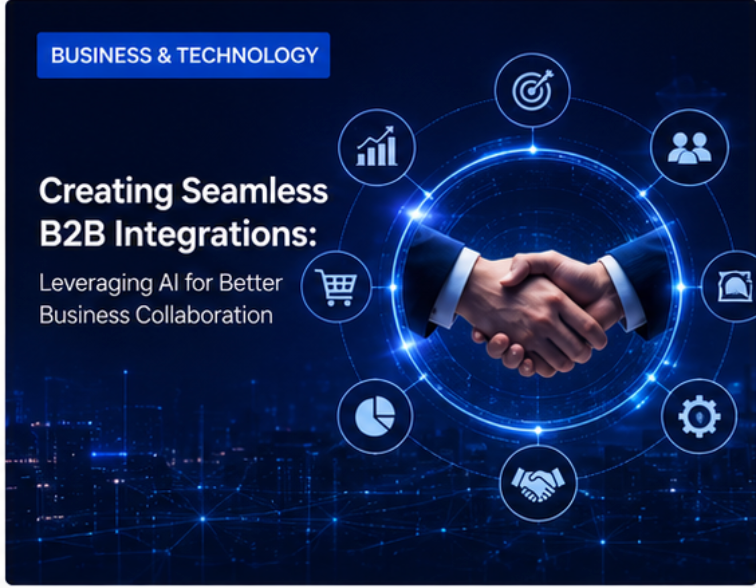
In today’s interconnected digital ecosystem, businesses rely heavily on multiple software applications to manage operations, customer relationships, inventory, finance, and communication. However, when these systems operate independently, organizations often face inefficiencies, data silos, and communication gaps.
Artificial Intelligence (AI) is transforming B2B integrations by enabling smarter workflows, automated data exchange, and enhanced collaboration between business systems.
Why B2B Integration Matters
Modern enterprises use various platforms such as:
- CRM Systems
- ERP Solutions
- Marketing Automation Tools
- Inventory Management Software
- Customer Support Platforms
Without proper integration, employees spend countless hours manually transferring information between systems.
How AI Enhances B2B Integrations
Intelligent Data Mapping
AI can automatically identify and map data fields across different platforms, reducing implementation time and minimizing errors.
Automated Workflow Management
Machine learning algorithms can analyze business processes and automate repetitive tasks such as:
- Invoice Processing
- Lead Management
- Order Tracking
- Customer Follow-ups
Predictive Analytics
AI-powered integrations provide actionable insights by analyzing large volumes of data and predicting trends before they occur.
Benefits for Organizations
- Increased Productivity
- Reduced Operational Costs
- Improved Data Accuracy
- Faster Decision-Making
- Enhanced Customer Experience
Conclusion
AI-powered B2B integrations are becoming essential for businesses seeking efficiency, scalability, and competitive advantage. Organizations that embrace intelligent integration strategies will be better positioned for future growth.